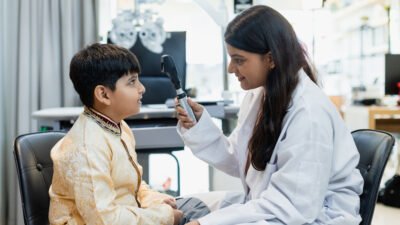


“Mumma, I can’t see the blackboard properly”—those dreaded words that make every Indian mother’s heart skip a beat. If you’re reading this while your teenager squints at their phone or complains about headaches after homework, you’re definitely not alone in this journey.
The Reality Check: What Every Indian Mother Needs to Know About Myopia
Let’s start with the numbers that matter to us as Indian parents. Studies predict that myopia prevalence in India will increase to 31.89% by 2030, 40.01% by 2040, and a staggering 48.14% by 2050. This means that nearly half of our children’s generation will be myopic by the time they’re adults. That’s a lot of concerned mothers visiting eye doctors!
But here’s what many of us don’t realize: myopia isn’t just about needing spectacles. Think of it like this—imagine your child’s eye as a perfectly tuned tabla. In myopia, the eye grows slightly longer than it should, like stretching the tabla skin too tight. This means distant objects appear blurry because the image forms in front of the retina instead of directly on it.
The telltale signs every Indian mother should watch for include your child holding books very close to their face, complaining about not being able to see the teacher’s writing from their usual seat, frequent headaches after studying (especially during board exam preparations), and that characteristic squinting that makes them look like they’re permanently suspicious of everything.
Why Our Indian Teenagers Are More at Risk
The Academic Pressure Cooker
Let’s address the elephant in the room—our education system. Between school, coaching classes, tuition, and homework, our teenagers spend an average of 10-12 hours daily doing close-up work. Add to this the pressure of competitive exams like JEE, NEET, and board exams, and you have a perfect recipe for myopia development.
Unlike our childhood days when we played cricket in the colony grounds after school, today’s teenagers often go from one indoor activity to another. The combination of intense near work and limited outdoor time creates what eye experts call the “perfect storm” for myopia development.
The Digital Generation Challenge
Our children are the first generation to grow up entirely in the digital age. Online classes during the pandemic only accelerated this trend. Many Indian teenagers now spend 8-10 hours daily on screens—from morning online classes to evening entertainment on YouTube or Netflix.
The problem isn’t just screen time itself, but how we use screens in India. Many of our homes don’t have optimal lighting for screen use, and children often study in bedrooms with poor ventilation and inadequate natural light. This combination of extended screen time and poor lighting conditions significantly increases myopia risk.
The Outdoor Activity Gap
Research shows that spending just two hours daily outdoors can significantly reduce myopia development. But for most Indian urban teenagers, outdoor time is limited to the walk from home to coaching class. The bright Indian sunlight that our grandparents took for granted is exactly what our children’s eyes need for healthy development.
The Real Impact on Indian Families
Academic Performance and Career Dreams
Picture Caption: A worried student struggling to read exam questions clearly, with blurred text showing how myopia affects test performance
In our competitive academic environment, unclear vision can be devastating. Imagine your child sitting for the JEE or NEET exam, unable to read the questions clearly. Many parents don’t realize that vision problems can significantly impact academic performance, leading to misdiagnosed “attention problems” or “lack of focus.”
Poor vision affects not just exam performance but also participation in class discussions, sports activities, and overall confidence. When children can’t see the blackboard clearly, they often become passive learners, which can impact their overall educational experience.
The Social and Emotional Side
Let’s be honest about the social aspects. Many Indian teenagers worry that spectacles will affect their appearance, especially with the pressure of looking good for college admissions or future marriage prospects (yes, we still think about these things!). The good news is that today’s eyewear is more stylish than ever, and many Bollywood celebrities and cricket players proudly wear glasses.
However, the emotional impact goes deeper. Children who can’t participate fully in sports or activities due to vision problems may develop lower self-esteem. As mothers, it’s crucial to address these concerns openly and help our teenagers understand that clear vision is more important than any perceived social stigma.
The Long-term Health Concern
Here’s the part that keeps us mothers awake at night: uncorrected myopia can lead to serious complications later in life, including retinal detachment, glaucoma, and macular degeneration. Think of it as an investment in your child’s future quality of life. The decisions we make now about their eye care will impact them for decades.
Your Treatment Options: What’s Available in India
Traditional Spectacles: The Reliable Choice
The good news is that spectacle technology has come a long way from our childhood days of thick, heavy glasses. Modern lenses are thinner, lighter, and available in various materials. Many Indian optical stores like Saoji Vision Care offer teenager-friendly frames that look more like fashion accessories than medical devices.
Contact Lenses: Freedom for Active Teenagers
For teenagers involved in sports or cultural activities like dance or drama, contact lenses offer freedom of movement. Daily disposable lenses are particularly suitable for beginners, though they require responsibility in handling and hygiene—something that varies greatly among Indian teenagers!
Monthly or yearly lenses are more economical for regular use, costing between ₹1,500 to ₹4,000 per year. However, proper training in insertion, removal, and cleaning is essential, especially given our climate and dust conditions.
Advanced Options: What’s New in Indian Eye Care
Orthokeratology (Ortho-K) is now available in major Indian cities like Delhi, Mumbai, Bangalore, and Chennai. These special contact lenses worn overnight can temporarily correct vision during the day. While more expensive (₹25,000 to ₹50,000 annually), they’re effective for suitable candidates.
Low-dose atropine eye drops, shown to slow myopia progression, are being used by progressive eye care practitioners in India. These specialized drops require careful monitoring and aren’t suitable for all children, but they represent a significant advancement in myopia management.
Practical Lifestyle Changes for Indian Families
Making Outdoor Time Happen
The challenge for Indian families is finding safe, accessible outdoor spaces. Here are practical solutions that work in our context:
Early morning or evening walks in your society compound or local park can provide essential outdoor time while avoiding the harsh midday sun. Many Indian communities have badminton courts or open spaces that are perfect for outdoor activities.
Weekend trips to nearby hill stations or beaches aren’t just family bonding time—they’re essential for your teenager’s eye health. The key is consistency rather than intensity. Even 30 minutes of morning outdoor time before school can make a significant difference.
Consider encouraging outdoor hobbies that match your teenager’s interests. Photography walks around the neighborhood, gardening on terraces or balconies, or joining local sports clubs can provide regular outdoor exposure.
Managing Screen Time in the Indian Context
Given that online education is now a permanent part of Indian schooling, complete screen avoidance isn’t realistic. Instead, focus on healthy screen habits:
The 20-20-20 rule becomes crucial: every 20 minutes, look at something 20 feet away for 20 seconds. Teach your teenager to look out the window at distant buildings or trees during study breaks.
Improve lighting conditions in study areas. Position the computer screen perpendicular to windows to avoid glare, and ensure adequate room lighting. Many Indian homes have poor study lighting, which strains the eyes further.
Create a family screen schedule that includes designated no-screen times, particularly before bedtime. This not only helps eye health but also improves sleep quality.
Nutrition and Eye Health
Our traditional Indian diet actually contains many foods excellent for eye health. Encourage consumption of green leafy vegetables like spinach (palak), methi, and amaranth, which are rich in lutein and zeaxanthin.
Include foods rich in vitamin A like carrots, sweet potatoes, and papaya. Fish, especially varieties like pomfret and mackerel available on Indian coasts, provide omega-3 fatty acids essential for eye health.
Traditional preparations like carrot halwa, spinach paratha, and fish curry aren’t just delicious—they’re also eye-healthy choices that our teenagers are likely to accept.
Navigating Indian Healthcare: Finding the Right Eye Care
Understanding Your Options
India has a unique healthcare structure for eye care. Retail optical chains offer basic eye testing and spectacles, suitable for routine prescriptions. However, for comprehensive myopia management, you’ll need specialized care.
Renowned institutions like Sankara Nethralaya and LVPEI offer advanced myopia management services. While more expensive, they provide comprehensive care including the latest treatment options.
Government hospitals and medical colleges often have excellent ophthalmology departments with affordable services. AIIMS, PGI Chandigarh, and state medical colleges provide quality care at subsidized rates, though waiting times can be longer.
Cost Considerations for Indian Families
Basic eye examinations in India cost between ₹300 to ₹800, depending on the facility. Comprehensive myopia management consultations at specialized centers may cost ₹1,500 to ₹3,000.
Most medical insurance policies in India now cover eye care, including spectacles up to certain limits. Check with your insurer about coverage for myopia management treatments.
Many eye care chains offer seasonal discounts and student packages. Timing your purchases around festival seasons or back-to-school periods can result in significant savings.
Building a Long-term Relationship
Choose an eye care provider who explains things clearly in a language you’re comfortable with. Many Indian practitioners speak multiple languages and understand local concerns about cost and accessibility.
Ensure your chosen provider offers regular follow-up care and is accessible for emergency consultations. In our climate, eye infections and allergies are common, and having a trusted eye care professional is invaluable.
Look for providers who stay updated with international practices but understand Indian contexts, including dietary preferences, lifestyle constraints, and budget considerations.
The Indian Mother’s Action Plan
As Indian mothers, we’re experts at managing complex schedules and health concerns. Here’s your practical action plan for managing your teenager’s myopia:
Start with a comprehensive eye examination at a reputable center. Don’t wait for complaints—many teenagers don’t realize their vision is compromised because the change is gradual.
Create a family routine that naturally incorporates outdoor time. Morning walks, evening games in the society compound, or weekend outings serve multiple purposes: family bonding, exercise, and eye health.
Work with your teenager’s school to ensure they have a front-row seat if needed and that teachers are aware of any vision concerns. Many Indian schools are now more accommodating of students with special needs.
Establish a partnership with your teenager rather than imposing rules. Explain why eye health matters for their future career goals, whether it’s becoming a doctor, engineer, or pursuing any other dream that requires good vision.
Looking Ahead: Your Child’s Bright Future
Managing myopia isn’t about limiting your teenager’s dreams—it’s about ensuring they have the clear vision needed to achieve them. Whether your child dreams of becoming a software engineer, doctor, artist, or entrepreneur, good vision is fundamental to their success.
The most important thing to remember is that myopia is highly manageable with today’s technology and treatment options. Your proactive approach now will pay dividends throughout your child’s life.
With myopia rates in India projected to reach nearly 50% by 2050, early intervention and proper management become even more crucial. You’re not just addressing a vision problem—you’re investing in your child’s future quality of life.
Remember that every child’s myopia journey is unique. What works for your neighbor’s child may not be the best fit for yours. Stay patient, stay informed, and most importantly, maintain open communication with your teenager about their vision and comfort.
The goal isn’t perfection—it’s progress. Every outdoor hour, every screen break, and every eye exam is a step toward preserving your child’s vision for the future.
Frequently Asked Questions from Indian Parents
Q: At what age should I start worrying about myopia in my child? A: Myopia prevalence is significantly higher among children aged 11-17 years than those aged 5-10. Start paying attention during the pre-teen years, especially if your child begins complaining about seeing distant objects or if there’s a family history of myopia.
Q: Are expensive treatments worth it, or are basic spectacles sufficient? A: Basic spectacles are excellent for vision correction and are sufficient for many children. However, if your child’s myopia is progressing rapidly (prescription changes every 6-12 months), investing in advanced treatments like orthokeratology or atropine drops may be worthwhile to slow progression and prevent high myopia complications.
Q: How do I convince my teenager to wear spectacles regularly? A: Let them choose their frames—this gives them ownership of the decision. Consider contact lenses for special occasions or sports. Explain how clear vision will help them in their studies and future career. Sometimes peer pressure helps; if their friends wear stylish glasses, they’re more likely to accept them.
Q: Is it safe to buy spectacles online in India? A: Online platforms like Lenskart offer convenience and good prices, but ensure you have a recent, accurate prescription from a qualified optometrist. For first-time spectacle wearers or significant prescription changes, an in-person fitting is recommended to ensure proper alignment and comfort.
Q: What should I do if my family can’t afford expensive myopia treatments? A: Start with basic spectacles from government hospitals or medical colleges, which offer quality care at affordable prices. Focus on free interventions like increasing outdoor time and proper screen hygiene. Many eye care chains offer EMI options, and some NGOs provide subsidized eye care for underprivileged families.
Q: How often should my teenager’s eyes be checked? A: For myopic teenagers, eye exams every 6-12 months are typically recommended, depending on how rapidly their prescription is changing. If your child’s myopia is stable (prescription hasn’t changed in over a year), annual exams may be sufficient.