


Imagine waking up, rubbing your eyes, and seeing the world in crisp detail—no glasses, no contacts, no surgery. For thousands of people, this isn’t a fantasy. It’s the magic of orthokeratology (OK), a little-known vision correction trick that’s as simple as wearing contacts while you sleep. Here’s why eye doctors call it “the best-kept secret in optometry”—and how it might just change your life.
The Retainer for Your Eyes
Meet Ravichandran, a 34-year-old CA who’d worn glasses since third grade. “I hated contacts—they dried my eyes out,” he says. Then his optometrist suggested orthokeratology. Skeptical but curious, Ravi tried it. “By day seven, I could see my coffee maker across the office. I cried.”
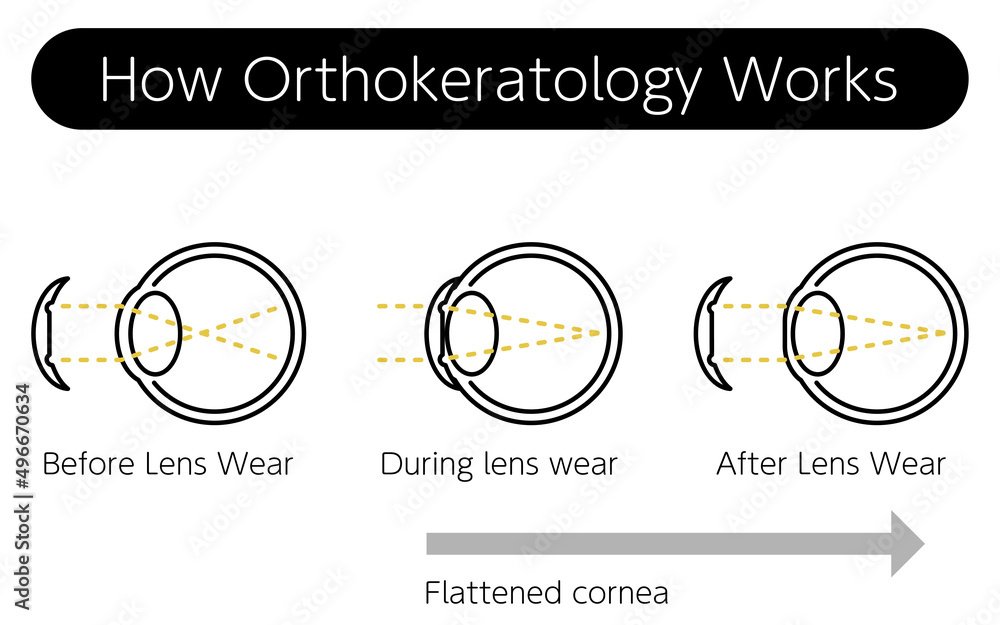
Orthokeratology uses custom, breathable lenses worn overnight to gently reshape the cornea (the eye’s clear outer layer). Like dental retainers train teeth, OK lenses train your eyes. Remove them in the morning, and voilà: clear vision for up to 48 hours. No surgery. No daytime contacts. Just freedom.
The “Why Didn’t I Know About This?” Perks
1. Myopia Control for Kids
Childhood myopia (nearsightedness) is skyrocketing, linked to screens and less outdoor play. But studies show OK lenses slow progression by 50–73%—better than regular glasses.
“It reshapes the eye to prevent elongation, parents call it a miracle.”
Yeshwant Saoji, an OK specialist in Nagpur, Maharashtra.
2. Ultimate Backup Plan
Unlike LASIK, OK is reversible. Hate it? Stop wearing the lenses, and your eyes revert. It’s perfect for brides, travelers, or anyone wanting a ‘trial run’ for life without glasses.
How It Works (While You Snooze)
- Custom-Fit Science A painless 10-minute scan maps your cornea’s contours, like a GPS for your eye. Lenses are designed using those specs.
- Overnight Magic The lenses apply gentle pressure to reshape the cornea. Think of it as a lullaby for your eyeballs.
- Morning Freedom Pop out the lenses and stash them in their case. It’s like having superpowers.
But Wait—Is It Safe?
Like all contacts, OK requires hygiene. Infections are rare (0.014% equivalent to other lenses), but never skip cleaning. Side effects like dry eyes or halos around lights usually fade as your eyes adjust. It’s safer than daytime contacts for kids, as they’re not handling lenses at school.
Who’s It For?
- Active adults: Swimmers, cyclists, and gym-goers love no-lens days.
- Screen-weary parents: Protect kids’ eyes from worsening myopia.
- Surgery-phobes: Test-drive clear vision without permanent changes.
Not for: Severe dry eye, very high prescriptions, or irregular corneas (unless treating keratoconus).
The Bottom Line
Orthokeratology isn’t new—it’s been around since the 1960s—but it’s still optometry’s best-kept secret. Whether you’re a parent, an athlete, or just tired of foggy glasses, OK offers a simple, reversible path to visual freedom. As Shraddha says: “Why didn’t someone tell me about this 20 years ago?”
Did You Know?
- Astronauts use OK in space—no floating contacts!
- The U.S. military pioneered OK for fighter pilots’ night missions.
- OK lenses can cost less than a year’s supply of daily contacts.



This article is exactly what I needed! Your insights are incredibly helpful.
I’m happy to hear you find value in my content. Thanks for your continued support!
You’ve changed the way I think about this topic. I appreciate your unique perspective.